


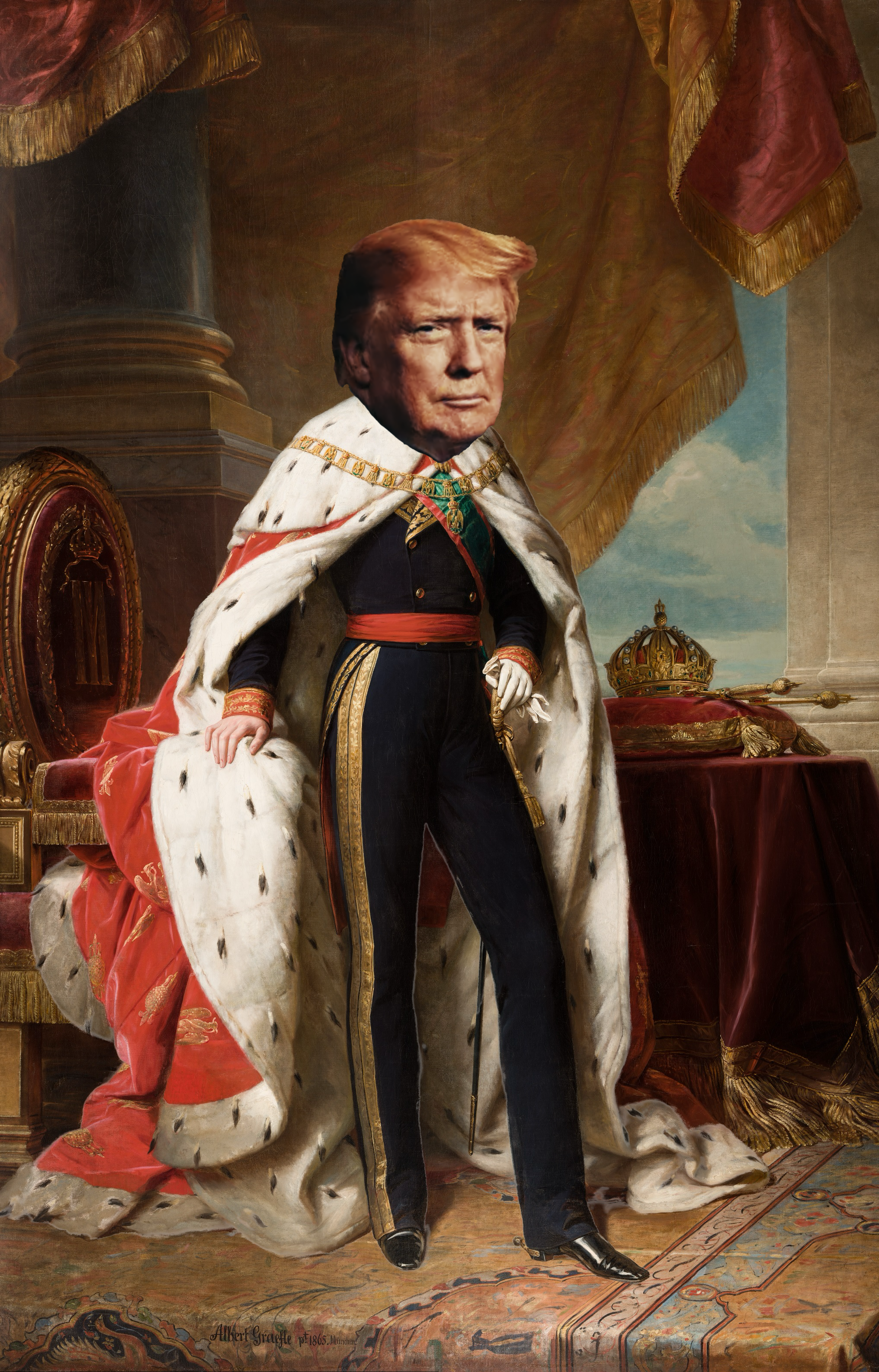
“We call our age the Age of Enlightenment,” Fernando Maximiliano wrote ruefully in 1848, “but there are cities in Europe where future men will look back with horror.”
Revolutions had roiled the Habsburg Empire earlier that year, but they were put down by the monarch with violent zeal. Its new emperor, Franz Joseph, had little tolerance for this new liberalism of the age. Maximiliano lamented how tribunals were now putting to death those “whose only crime lay in wanting something different to the arbitrary rule of governments which placed themselves above the law.”
Maximiliano believed that even something as staid and stiff as the Austrian empire was capable of reform and modernization. He advocated for some semblance of democracy, of a robust and dynamic art scene, and of local rule.
That’s not what happened. Fearful of revolution, the emperor expanded his secret police, rounded up critics of the monarchy, and shuttered any university believed to be stoking sedition, particularly in territories struggling for freedom from the empire. His brutality, particularly in a rebellious Italy, prompted waves of assassination attempts and, ultimately, a war against France which he lost handily.
And so Maximiliano left Europe and wandered through the New World. Brazil so captured his imagination that, by the time he returned to Austria, he mostly moped around and wrote travelogues in the German style of Weltschmerz — literally 'world weariness.’
Maximiliano had an idea for how the world ought to be, and it was nothing like the world as he saw it. And that made him depressed.
A Mexican politician named José María Gutiérrez de Estrada had the cure for Maximiliano’s ennui. Gutiérrez was, rightly, terrified that the United States would keep cannibalizing Mexico. He believed that the only path to independence and sovereignty for his country came via Europe. With Washington tied up with its own civil war, unable to enforce its Monroe Doctrine, Gutiérrez made an impassioned plea to the powers of Europe to send him a king.
French Emperor Napoleon III heeded that call, sending tens of thousands of French troops to Mexico to overthrow its republic. Despite a brutal defeat at the hands of the Mexican forces on May 5, 1862 — celebrated today as Cinco de Mayo — the French, eventually, captured Mexico City.
In 1863, an envoy from Mexico arrived in Austria. It was addressed to Fernando Maximiliano José María de Habsburgo-Lorena, second son of Archduke Franz Karl and brother to Franz Joseph. Napoleon wanted to make Maximiliano Emperor of Mexico.
Maximilian I, as he came to be named, dreamt of a liberal, constitutional monarchy. He declared that the Mexican people would have the opportunity to vote on his candidacy for emperor, even as French forces struggled to capture the country from defenders of the republic. A huge soiree was held after Gutiérrez formally offered him the monarchy. At the end of the evening, Maximilian retired to his appropriately-named yacht: La Fantasia.
Napoleon convinced his new governor to give up on the ideas of legitimacy. “Allow me to lay great stress upon one point: A country torn apart by anarchy cannot be regenerated by parliamentary liberty,” he told Maximilian. “What is needed in Mexico is a liberal dictatorship.”
And so Maximilian sailed for Mexico and arrived as the king nobody wanted.
“Mexicans!” the new emperor proclaimed. “You have desired my presence! Your noble nation, by a willing majority, has elected me to watch over your destinies! I gladly submit to this call.”
In fact, Maximilian spent his early reign plowing state money into renovating his new abode, a castle outside the capital built for Spanish occupiers. The monthly allowance he drew from the state was four times more than the ousted president had earned in a whole year. The queen held regular soirées, plying European and Mexican elites with quail and truffles.
The enlightened emperor was not without an interest in the little people. Mexican society was deeply riven after decades of colonialism, invasion, and civil war. But Maximilian continued to believe that noble rule could smooth out those differences, insofar as he understood them — which is to say, not much.
To promote his new, benign rule, Maximilian embarked on a national tour during the rainy season, with hordes of soldiers clearing and pacifying his route before he took it. He arrived in placated towns of supportive locals and he did so in style: Sombrero on, a white vest, riding a black horse with a cowboy saddle.
In the middle of his ensemble, Maximilian wore a bright red cravat. “In Mexico to dress like this was a political statement,” writes historian Edward Shawcross.1 Not least of which because the red cravat was, unbeknownst to the King, a symbol of the radical republicans. The conservatives, too, were bewildered: “When they had invited a Habsburg to rule over them, they had not expected him to dress as a revolutionary cowboy,” Shawcross writes.
Elsewhere in the country, atrocities were being conducted en masse. Bodies hung from trees and entire towns were burned on a whim. The French used terror to compensate for their lack of forces, while the nationalist guerrillas used terrorism to hit a better-equipped enemy.
As the war worsened, and as turmoil in Europe distracted Napoleon, the French forces picked up and left Mexico. Maximilian knew his bizarre operation could not survive without outside help — but no amount of pleading and pestering could convince Napoleon to come to his aid.
On Mexican independence day, Maximilian nevertheless emerged from his castle to address the dwindling number of citizens who still believed in his rule. “I still stand firmly in the place to which the will of the nation called me: Unmindful of all the difficulties, without faltering in my duties, for a true Habsburg never leaves his post in the moment of danger.” Notwithstanding that cri du coeur, Maximilian oscillated between abdication and fighting to the death.
Even as opposition forces closed in on the city, even as they reduced his empire to a few city blocks, Maximilian continued to believe in his office — he insisted that a national congress should decide whether he stayed or went, not an armed invasion.
But Maximilian was, ultimately, captured, prosecuted, and sentenced to death. The reinstalled president was inclined to spare the aristocrat, but decided a message needed to be sent: Mexico doesn’t tolerate foreign rulers. And so on June 19, 1867, the last Emperor of Mexico was shot by a firing squad.
Nothing about the reign of Maximilian I was right or just. But of the many problems we could diagnose from his brief rule, one is simply that he ruled for other rulers. He paid lip service to the idea that he was there for the Mexican people, but in reality he governed the state to please Napoleon, to ward off Abraham Lincoln’s ire, to impress his emperor brother, and to dazzle the great minds of Europe.
Replacing this era of satellite government was the promise of nationalism, of a community of nations each striving for the benefit of their own people.
Donald Trump, who has transcended nationalism and reached chauvinism, is dragging us back to the past. The reality show tsar has convinced his citizens, and much of the world, that he has a divine right to appoint and dismiss his regional emperors. Like a modern Napoleon, the president sees his own political project hinging on how he can control and manipulate his puppet regimes and sycophants.
Writing in 2021, Shawcross saw echoes of the past in the present, too. “As the American imperial project proceeded into the twentieth century and beyond, extending farther across the globe,” he concludes his book, “it would frequently deploy the strategy that failed in Mexico — regime change.”
This week, on a very special Bug-eyed and Shameless, I want to talk about the new global alliance being formed underneath us. Like the network of royal bloodlines and marriage-alliances of yore, this is an intensely personal and autocratic affair. It’s a worldwide network of leaders handpicked and personally approved by Donald Trump.
It’s the rise of the Trump Bloc.
“Suzerainty in Full Motion”
Let’s start our tour of the Trump World Order in Venezuela.
It has been just two months since Trump sent in the marines to capture Nicolás Maduro. Trump wasted absolutely no time in mocking those who thought he might push for a democratic overhaul in the authoritarian country: He had, in fact, struck a deal with Maduro’s right-hand woman, Delcy Rodríguez.
On the sidelines are María Corina Machado, the Nobel Peace Prize winner who is broadly popular in the country; and Edmundo González, the man who won the last presidential election but who was robbed of his win by Maduro’s corruption.
Rodríguez remains in place because she has provided Trump what he wants: Oil.
Since the American invasion, two trading houses for Venezuelan crude have moved some 27 million barrels to refineries in America. Just last week, 500,000 barrels of heavy crude — the kind that America’s Gulf refineries need, which they normally get from the Middle East — left the country, bound for the United States. There are more than 4 million barrels more of that heavy crude waiting to be shipped, according to documents viewed by Reuters.
Trump seems to be plundering state oil reserves and it is not clear what a long-term agreement might look like, given that Trump clearly has the country over a barrel, so to speak.
The remnants of the regime have every reason to cooperate — if they don’t, they risk facing the inside of jail cells for the crimes committed by the Maduro regime over the years.
Indeed, a leaked video recording shows Rodríguez pleading with her fellow apparatchiks to stand together as they give in to Trump’s demands, insisting it was necessary “to preserve peace … to rescue our hostages … and to preserve political power.” (She also said that the decision to cooperate with the invasion was made after the Americans gave “me 15 minutes to respond, or they would kill us.”)
The Caracas Chronicles, an independent media outlet committed to “making Venezuela make sense,” summed up the current state of affairs in the perfect way: “Suzerainty in full motion.”
Trump did impose some notional conditions on this new regime. Not long after being installed, Rodríguez announced an end to Venezuela’s era of repression — instituted by the man she served faithfully. And, to date, the regime has released thousands of political prisoners.
But Venezuelan NGO Foro Penal says more than 500 dissidents remain unjustly behind bars. Others remain missing. What’s more, the group says, many of those released by the regime appear to still have conditions on their freedom.
Take Juan Pablo Guanipa, a prominent opposition leader, who was released from prison early last month. Immediately after his release, he slammed the government for its flawed amnesty bill. As if to prove his point, the regime caterwauled that he violated the terms of his release and dispatched armed goons to seize him. Guanipa has been under house arrest ever since.
“Some politicians believed they could do whatever they wanted,” the regime’s interior minister said in reference to Guanipa’s arrest.
It seems that the law could also exclude Machado from amnesty, suggesting the state may try and block her bid for the presidency.
All of this makes for strange times in Caracas. Recent polling of the country has found that Venezuelans generally approve of the capture of Maduro. At the same time, not even one-in-four believe that Rodríguez represents a meaningful change, an overwhelming majority have a negative opinion of their new president, and a clear plurality believe that someone else should have been selected to take over.
Nearly 70% of Venezuelans want an election this year, and two-thirds of respondents said they would support Machado if an election were held today.
But giving the regime runway to plan for those elections — which Washington hints won’t happen until 2027 — increases the odds they will be neither free nor fair.
Umbral, an online platform which is trying to quantify Venezuela’s democratic transition, offers an interesting window into this tension. According to data collated by the open source effort, 68% of the 500-some Venezuelan citizens they surveyed seemed to think the country is on track for democratic transition. 46% of the experts they surveyed, by contrast, expected Venezuela to remain a stabilized electoral autocracy.
There’s no doubt that things will get better in Venezuela. With global scrutiny, the regime will need to be on its best behavior. And sanctions relief will make a meaningful difference in the lives of regular Venezuelans.
But the fact is that Trump and Rodríguez are now in a strange symbiosis. She needs him to stay in power, he needs her to turn over billions of dollars worth of oil without a fight.
It suggests that there will be no big changes in Venezuela in the near future.
Meet Your Board of Peace
Last month, a group of protesters gathered outside the inaugural meeting of Donald Trump’s much-ballyhooed Board of Peace. One of them was Rahim Yagublu, who lives in America and makes ends meet by driving Uber.
Back in his native Azerbaijan is Yagublu’s father, Tofig — a prominent opposition figure and critic of the incumbent regime. In 2025, Tofig was sentenced to prison on trumped-up charges of fraud and forgery. Amnesty International called his case “yet another grim milestone in Azerbaijan’s ongoing campaign to silence those who dare to criticize the government.”
Back in the United States, where the younger Yagublu lives, was Azerbaijani President Ilham Aliyev, an honored invitee onto Trump’s Board of Peace. So Yagublu showed up with a message: “Freedom to political prisoners!”
When Aliyev’s bodyguards caught sight of Yagublu and his fellow protesters, they rushed over, delivering a flurry of blows to the dissidents. Video shows the dictator’s goons attacking Yagublu and his compatriots, unprompted, and without reaction from local police.
In recent months, Trump has become obsessed with the Armenian-Azerbaijan conflict. Not because he seems to fully understand the long-standing ethnic and border disputes which have riven the neighbors — he frequently confuses Armenia with Albania — but because he can boast that he ended a war between both parties.
And his brag is, mostly, true. A surprisingly hot conflict in the disputed Nagorno-Karabakh region came to a sudden halt after Trump got involved and threw America’s weight around. Often obscured in Trump’s self-aggrandizing, however, is what’s actually going on in the region.
Azerbaijan, for example, has been pursuing trumped-up prosecutions of Armenian citizens and soldiers, accusing them of nazism. (A trick borrowed from Aliyev’s pal Vladimir Putin.) It has further ramped up political prosecutions, sometimes in absentia, against journalists and human rights campaigners. In January, police in Baku raided an LGBTQ center and arrested more than 100 people. The country has been ruled by the Aliyev clan almost exclusively since independence in 1991, and the regime seems to be only tightening its grip.
Aliyev and Armenia’s prime minister, the democratically-elected Nikol Pashinyan, are represented on the Board of Peace, as both leaders jockey for favor with Trump. But Armenian analysts say Aliyev is clearly winning. “The terms of peace are now being defined entirely by Azerbaijan,” one analyst told Armenian Weekly.
Indeed, Aliyev has pointedly said that peace is only possible if Armenia amends its constitution to swear off territorial claims to the Nagorno-Karabakh. But there are some indications that the demand is more of a gambit, and that Armenia will only face a new list of demands if it agrees. One advisor to the Armenian government has called the constitutional changes “a trap.”
But the administration is blinded by the PR benefits. Both countries are tripping over themselves to pitch the Trump Route for International Peace and Prosperity — a transportation corridor connecting both countries. Last month, Vice President JD Vance traveled to both countries to unveil shiny new investment and security pacts with both countries.
In a sign of how clumsily the administration is walking this line, Vance tweeted that he was visiting a memorial to the “1915 Armenian genocide,” apparently forgetting that his administration had rescinded America’s recognition of the mass killing as an act of genocide. He deleted the tweet and offered no explanation. (“An anonymous member of Vance’s team laid the blame over the mix-up on another anonymous team member and Vance was absolved of any responsibility,” OC Media reports.)
Also on the Board are, of course, Trump’s biggest fanboys in Latin America: Argentina’s Javier Milei, who recently secured a $20 billion bailout from America; and El Salvador’s Nayib Bukele, who is getting paid to take in Trump’s deportees.
His best friend in Europe, Hungary’s Viktor Orban, is there, too. Unlike some of his fellow members of the Board, however, Orbán hasn’t quite ruined his country’s democracy. Parliamentary elections are slated for next month and, despite lots of underhanded tactics to sway the public, Orbán is polling well behind his main rival. That’s why the Trump administration is openly campaigning for the incumbent’s re-election.
Take the election polling. Independent pollsters and those with ties to the opposition say the party of opposition leader Péter Magyar is somewhere between eight and 20 points ahead of Orbán’s Fidesz. Pollsters with ties to Fidesz, some of whom receive government subsidies, say Orbán has a five-point lead. One of those pollsters is John McLaughlin, an American who has been polling for Trump since 2011 and is considered to be his most-trusted pollster.
This is just a brief cross-section of the world leaders jockeying to earn favor with the mercurial president. But in so doing, they are re-fashioning themselves into members of a new bloc — an alignment of nations who have to worry about what Trump wants from day-to-day.
We can see that, domestically, this has only emboldened bad actors to cling to power. We don’t yet know how this Bloc of reactionary governments will alter the geopolitical playing field — but we can anticipate that it will probably be for the worse.

America’s Next Top Mullah, DonTrump’s El Comandante Race
Donald Trump’s war in Iran is, let’s just say it, stupid.
It is rash and ill-conceived. It ignores the advice of advisors and generals. It is illegal and immoral. Even its plain upsides, such as the killing of murderous bastard Ayatollah Ali Khamenei, are overshadowed by the strategic incoherence.
The Intercept spoke to numerous officials briefed on Trump’s war plans. When they asked one what the administration’s plans were for Iran, post-invasion, the official responded: “Whatever.”
Trump was not shy about his original plans for the country. “I have to be involved in the appointment [of the next Ayatollah], like with Delcy in Venezuela,” he said last week.
Unfortunately “most of the people we had in mind are dead,” Trump told reporters. That is to say: America and Israel killed them. No fear, Trump went on, “we have another group.” Ah, but, “they may be dead also.”
That Trump was looking to prop up one of Iran’s mullahs as a figurehead for the regime portends his plans for Iran: Pacify, not replace, the state; take the oil; move on.
This plan has backfired thus far, in just about every way. Iran is unleashing fury on the rest of the Middle East, a cynical ploy to break Washington’s nerve — which just might work. Israel, whose leader has long salivated about the prospect of exactly this war, is inflicting pain on the state wherever it can. This weekend, that pummeling turned to Iran’s oil sector, blackening the skies with choking smoke and soot. That has drawn Trump’s ire, who had a simple message for Israel: “WTF?”
Oil prices have skyrocketed to $100/barrel, and U.S. gas prices have shot up by $0.50 in just a week. What’s more, Iran’s strikes are violently shaking the Arabian Peninsula’s much-coveted role as a global financial oasis. And the going assessment of the U.S. intelligence community is that the American and Israeli war will likely fail to unseat the existing regime.
In Venezuela and elsewhere, Trump has been on the offensive: Actively working to install and win over sycophants who will help him remake the world in gold leaf. In the Middle East, however, Trump is suddenly on the defensive. If he has any hope to flip Iran from the ‘enemy’ column to ‘friend,’ while also keeping his Gulf allies happy, he will need to score a win. He needs to get the regime to stop firing rockets, he needs to get the Strait of Hormuz open again, and he needs to be able to walk away with tangible prizes.
While things are inherently unpredictable, it’s looking more and more like regime change will require either much more time or much more intensity. If the United States bombs more intensely, over months instead of weeks, or if it sends ground troops — it will not be in service of global peace and stability, it will be in the name of expanding the Trump Bloc.
But Trump doesn’t necessarily want regime change: If the Iranian regime offers fealty, he would no doubt accept. So rather than double-down, many indicators suggest that Trump will rush to make a deal at the earliest opportunity. As other nations have shown, buying Trump’s favor is relatively inexpensive. (With the election of Khamenei’s hardline son as the new Supreme Leader, however, negotiations may yet be a while off.)
Which brings us, finally, to Cuba.
Like in Iran, Donald Trump’s first term in office marked his obsessive attempts to rip up Barack Obama’s careful diplomacy with Cuba. After a significant easing of the embargo in 2015, Trump renewed the economic war on Cuba with gusto. (Something Joe Biden continued.)
In his second term, Trump and his lackey Secretary of State Marco Rubio have intensified economic warfare against Havana.
Some of it was incidental. In diverting flows of oil from Venezuela to America, Washington has effectively cut off a supply of fuel to the Caribbean island — and the White House has warned other nations not to start selling energy to the island. The administration’s plan seems to be to trigger as many crises in Cuba as it can until the regime collapses.
A fuel crisis has crashed into a food crisis, a water crisis, a garbage crisis, and just a general humanitarian crisis.
There is no strategic reason to torment the Cuban people into submission. Cuba has not exactly become the launching-pad for Russia or Chinese aggression in the hemisphere, as some had warned. On the contrary, it is increasingly hard to dispute the fact that America’s long-running embargo has helped keep the Communist regime in place. Cuba could be easily just left alone, were it not for the intense fixation of expatriate Cubans like Rubio.
And so Trump has indicated that Havana will be the next port of call for his gunboats.
Trump is, as always, trying to make a deal first. And those negotiations are every bit as cynical as his plots in Venezuela and Iran.
Spanish newspaper ABC reported in February that the CIA has been holding clandestine negotiations with Alejandro Castro Espín — son of Raúl, nephew of Fidel — to convince the regime to liberalize. The paper says those talks are mostly around allowing more American firms into the country, in exchange for oil exports. Extortion, put another way. It does not seem that these negotiations include political reforms.
“We Cubans have learned to distrust,” writes Yoani Sanchez. “Not out of cynicism, but from experience.”
Sanchez is a Cuban blogger and journalist who has been celebrated as a liberal voice in the country — and who has been repeatedly arrested by the state for that work. She’s been writing in recent weeks how anti-regime chatter has never been so open and widespread. “The hope that this very difficult moment will give way to ‘a free Cuba’ has settled into the collective imagination,” she wrote last month.
We should all want that for Cuba. But the truth is, freedom seems to be patently antithetical to joining the Trump Bloc. In fact, Trump seems to appreciate the speed and ease with which hybrid regimes and autocracies can bribe and flatter him.
There are smart, principled people who have cheered on the bombing of Iran’s theocratic regime, who shot off fireworks when Maduro was captured, who long for a post-Communist Cuba, who want to see long-term peace in Nagorno-Karabakh, and who hope for Orbán to lose power at the ballot box. But in every case, America has made clear that it wants friends more than it wants democracy.
Trump, like Napoleon before him, sees loyal governors as more important than free people.
That’s it for this (very late!) dispatch.
I’ve got a few other dispatches in the works that will be out sooner rather than later. The constant chaos of Trumpworld keeps diverting me from one topic to another.
If you want to read more from me on Iran, particularly Canada’s absurd support for the war, you can see my two recent columns in the Toronto Star: On Trump’s absurd gamble, and on the stack of lies he’s used to rationalize it.
A reminder that I’ve got regular videos coming out on the Soft Power channel over on Youtube. Episode 5 ought to be out very soon.
Finally, if you’re in Calgary this week: I’ll be delivering a lecture at Mount Royal University on Wednesday. (It will also be streamed online.) Sign up now!
Until next time!
The Last Emperor of Mexico: The Dramatic Story of the Habsburg Archduke Who Created a Kingdom in the New World, Edward Shawcross
Right down to the red cravat....
It turns out my knowledge of European history is uneven. Thank you. On point as usual.